
GLP-1 Diet Plan: What to Eat, What to Limit, and a Grocery List
What to eat on a GLP-1 diet plan: a food list by group, foods to limit and why, gentle foods for low-appetite days, and a grocery list by store section.


A GLP-1 diet plan is not a set of rules from a drug label. It is a way of eating that fits a smaller appetite and a slower stomach. That means small regular meals, protein first, fiber and fluids through the day, and fewer highly processed foods [1][5].
Most GLP-1 diet (or glp1 diet) food lists online give no reason or source for each food. This page gives the reason and source for each food. The sources are a 2025 joint advisory, a 2023 expert consensus on GLP-1 digestive side effects, and the Dietary Guidelines for Americans 2025 to 2030 [1][2][3]. You will find:
- A GLP-1 food list and foods to limit, each with its source
- A sample GLP-1 diet plan day
- A grocery list by store section that you can print
Table of Contents
- What Is a GLP-1 Diet?
- GLP-1 Diet Plan at a Glance: 7 Habits
- What to Eat on GLP-1: The Food List by Group
- Gentle Foods for Nausea and Low-Appetite Days
- GLP-1 Foods to Avoid or Limit, and Why
- Fluids and Fiber on a GLP-1 Diet
- A Sample GLP-1 Diet Plan Day
- GLP-1 Grocery List by Store Section
- Protein on a GLP-1 Diet: How Much and When
- Notes for Women and for Kidney Health
- When to Call Your Clinician
- Frequently Asked Questions
- Key Takeaways
- References
What Is a GLP-1 Diet?
There is no official GLP-1 diet. A GLP-1 diet is an eating pattern shaped around what the medicine does. The FDA-approved labels for GLP-1 medicines say these medicines delay gastric emptying, so food leaves the stomach more slowly [5].
A 2025 joint advisory from four US medical and nutrition societies sets out the core of a GLP-1 diet plan [1]:
- Regular, small meals at consistent times
- Protein-rich foods first in a meal, so you eat them before you feel full
- Vegetables, fruit, beans, lentils and whole grains
- Fewer refined grains, added sugars and ultra-processed foods
With a smaller appetite, each bite needs to carry nutrients [1]. If your GLP-1 medicine is a pill, follow its label on food timing, because the rules differ from one pill to another [4].
Background: our pages on GLP-1 medications and food noise.
GLP-1 Diet Plan at a Glance: 7 Habits
A GLP-1 diet plan comes down to seven habits, drawn from the 2025 advisory, the 2023 consensus, the Dietary Guidelines and the Medication Guides for GLP-1 medicines [1][2][3][4].
| Habit | What to do | Source |
|---|---|---|
| Small, regular meals | Eat at consistent times and avoid long gaps that leave you overly hungry | Advisory [1] |
| Protein first | Start each meal with its protein food | Advisory [1] |
| Fiber from foods, added slowly | Add beans, whole grains and produce a little at a time, with more fluids | Advisory [1]; pace from our guide |
| Fluids through the day | Sip water and unsweetened drinks through the day, but not so much that you feel too full | Medication Guides [4]; consensus [2]; Dietary Guidelines [3] |
| Light meals | Limit large meals and fatty or fried foods, especially in the first days | Advisory [1]; consensus [2] |
| Minimal alcohol | Keep alcohol low, since it may worsen nausea and reflux | Advisory [1] |
| Strength training | Train at least 3 times a week, plus at least 150 minutes of moderate aerobic activity a week | Advisory [1] |
The 2023 consensus adds habits for the start of treatment: eat slowly, eat smaller portions, stop eating when you feel full, and eat more often [2]. It also advises not lying down after a meal and not eating close to bedtime [2]. The advisory encourages even people who fast intermittently to eat their meals at regular times [1].
What to Eat on GLP-1: The Food List by Group
What to eat on GLP-1 comes down to four groups: protein foods, fiber foods and produce, healthy fats, and fluids, in small portions. This GLP-1 food list draws on the 2025 advisory, the Dietary Guidelines and our recipe pages [1][3].
Protein foods
The advisory encourages beans, peas, lentils, whole grains, dairy, seafood, eggs and lean poultry as protein sources [1]. Its low-volume picks for a small appetite are fish, eggs, Greek yogurt, cottage cheese, and nuts and seeds and their spreads [1].
- Dairy and eggs: plain Greek yogurt, cottage cheese, string cheese, part-skim ricotta, milk, ultrafiltered milk, eggs and egg whites
- Seafood and poultry: salmon, canned light tuna, cooked shrimp, skinless or rotisserie chicken, 93% lean ground turkey, deli turkey breast
- Plant proteins: beans, lentils, edamame, tofu and tempeh
- Lean beef: such as top sirloin (see the red meat note below)
- Shakes, bars or fortified products: some people meet their protein needs this way when food is hard [1]
Fiber foods, produce, fats and fluids
- Legumes, grains and seeds: lentils, black beans, edamame, oats, quinoa, brown rice, whole-wheat bread, chia seeds
- Vegetables: green beans, broccoli, red pepper, zucchini, carrots, tomatoes, leafy greens
- Fruit: berries, apples, citrus, bananas, grapes, avocado, peaches
- Fats: olive, canola or avocado oil, avocado, nuts, seeds and nut butters [1]
- Fluids: water, unsweetened drinks, broth, soups, and ginger or peppermint tea [1][2][3]
In the first few days of treatment, avoiding fatty or high-fiber foods can help ease nausea [1]. After that, our guide suggests raising fiber gradually, with more fluids.
Values below are approximate, from USDA FoodData Central, and match our recipe pages [7].
| Food | Serving | Per serving |
|---|---|---|
| Salmon fillet | 6 oz raw | ~35 g protein |
| Rotisserie chicken breast, skin removed | 4 oz | ~32 g protein |
| Plain nonfat Greek yogurt | 1 cup | ~25 g protein |
| Cottage cheese, 2% | 1 cup | ~24 g protein |
| Canned light tuna, drained | 5 oz can | ~21 g protein |
| Cooked shrimp | 3 oz | ~20 g protein |
| String cheese | 2 sticks | ~14 g protein |
| Hard-boiled eggs | 2 large | ~12 g protein |
| Cooked lentils | ½ cup | ~9 g protein, ~8 g fiber |
| Shelled edamame | ½ cup | ~9 g protein |
| Canned black beans, drained | ½ cup | ~6 g protein, ~6 g fiber |
| Cooked quinoa | ½ cup | ~4 g protein, ~3 g fiber |
| Chia seeds | 2 tbsp | ~3 g protein, ~7 g fiber |
| Raspberries | ½ cup | ~4 g fiber |
Branded items vary by label: ready-to-drink shakes have about 30 g per bottle (18 to 42 g), ultrafiltered milk about 13 g per cup, and bone broth about 9 g per cup [7].
Gentle Foods for Nausea and Low-Appetite Days
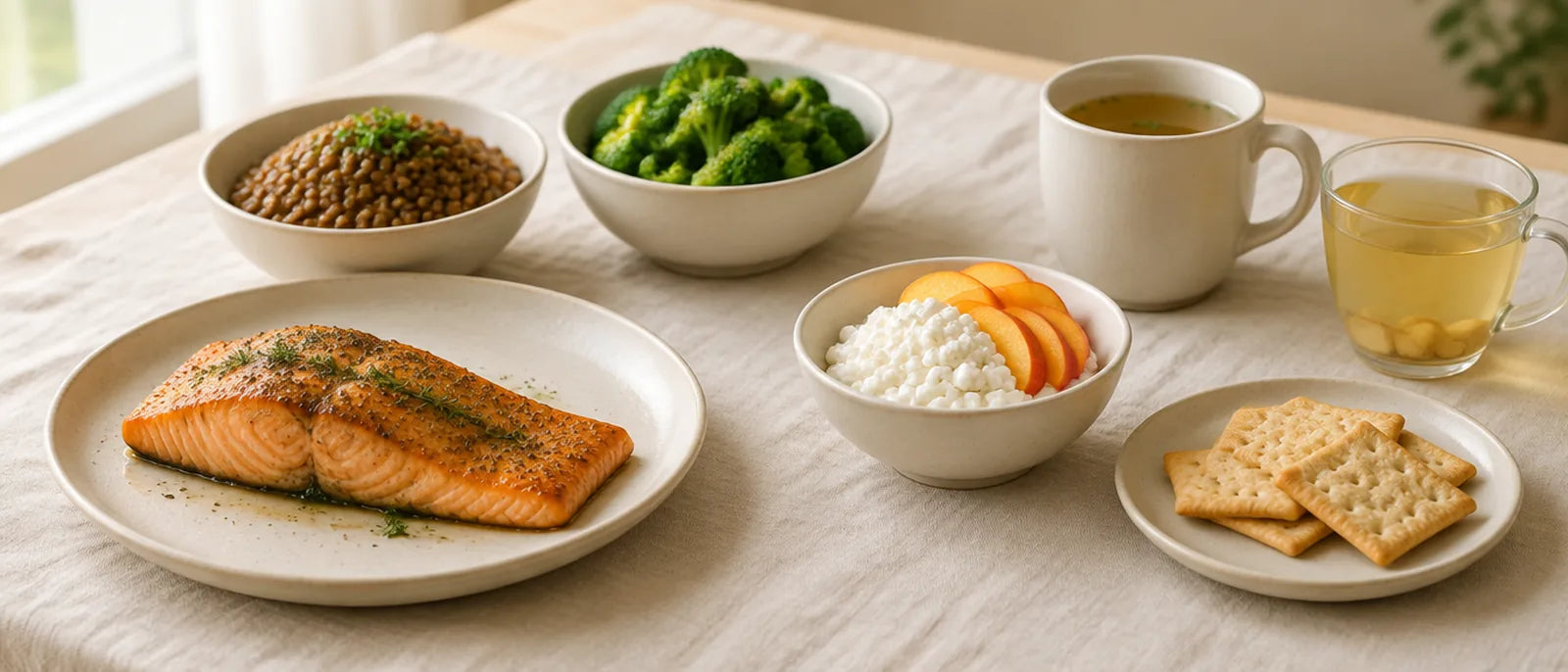
Gentle foods for a GLP-1 diet are small, mostly bland foods you can face when nothing sounds good. For days when nausea stops you eating, the 2025 advisory suggests eating breakfast, then small meals every 3 to 4 hours while drinking enough fluids [1].
Nausea often shows up in the morning or after long gaps without food [1]. For what to eat on GLP-1 when not hungry, start here:
- Plain Greek yogurt, cottage cheese, or cottage cheese with peaches
- A ready-to-drink protein shake or a cup of ultrafiltered milk
- Chilled cooked shrimp
- Bone broth or a light soup
- Smoothies made with fruit, vegetables and unsweetened milk or yogurt
The advisory notes that healthfully prepared smoothies and protein drinks made with unsweetened milk or yogurt, cottage cheese, and soups tend to be easier to face than red meat, cold cuts or hard cheese [1]. For nausea, the 2023 consensus lists crackers, apples, mint and ginger, and the advisory adds that ginger or peppermint tea can help [1][2]. Crackers are a refined grain, so keep them for queasy days [3]. When hunger is low and changing foods is not enough, an alarm or other reminder to eat can help [1].
Diarrhea days
On diarrhea days, the consensus advises avoiding dairy, coffee, alcohol, soft drinks, very cold or very hot foods, and high-fiber foods for a while [2]. It also lists sugar alcohols such as sorbitol, mannitol, xylitol and maltitol, found in some candy and gum [2]. Lean instead on chicken broth, rice, carrots and very ripe fruit without the skin [2]. Save the dairy and chilled picks, such as yogurt, shakes, smoothies and chilled shrimp, for later.
Our page on gentle GLP-1 snacks has more ideas. If symptoms do not go away, see when to call your clinician.
GLP-1 Foods to Avoid or Limit, and Why
The GLP-1 foods to avoid or limit are the ones that tend to worsen digestive symptoms or crowd out nutrients. Most are limits, not bans [1][2][3].
| Limit | Why | Source |
|---|---|---|
| Large meals | Vomiting is more likely after large meals | [1] |
| Fatty and fried foods | Avoiding fatty foods early can ease nausea, and avoiding high-fat meals can help with diarrhea and heartburn | [1][2] |
| Refined grains, flours, starches and added sugars | With a smaller appetite, each bite needs to carry nutrients; the Dietary Guidelines say to significantly reduce refined carbohydrates such as white bread and crackers | [1][3] |
| Sugar-sweetened drinks such as sodas, fruit drinks and energy drinks | Both sources say to avoid them | [1][3] |
| Red and processed meats | The advisory says to eat them in moderation or minimize them, citing general-population links to type 2 diabetes, heart disease and colorectal cancer | [1] |
| Most fast food, sweets, savory snacks and other ultra-processed foods | The advisory calls avoiding them generally advisable, though some may be neutral or positive; the Dietary Guidelines say to avoid highly processed salty or sweet packaged foods such as chips, cookies and candy | [1][3] |
| Alcohol | May worsen nausea and reflux, so keep it minimal; some people should avoid it completely (see the FAQ) | [1][3] |
| Fizzy drinks, only if they bother you | For heartburn, burping or indigestion, the consensus advises avoiding alcoholic and carbonated drinks | [2] |
| Dressings, spicy foods, canned foods and sauces that are not home-cooked | The consensus's advice when starting treatment | [2] |
| Dairy, coffee, soft drinks, sugar alcohols and high-fiber foods | On diarrhea days only, per the consensus | [2] |
| Emotional, mindless or nighttime eating | On the advisory's minimize or avoid list | [1] |
Apart from alcohol for some groups, nothing here is off limits forever: the advisory encourages flexibility and portion-controlled treats [1]. Our grocery list keeps canned beans and light tuna as quick protein: drain and rinse the beans, and skip the tuna on diarrhea days.
Where the guidance disagrees
- Red meat: the advisory says to eat red and processed meats in moderation or minimize them, while the Dietary Guidelines include red meat among protein foods [1][3].
- White rice: the advisory lists refined carbohydrates among foods to minimize or avoid and names white rice as one, while the consensus lists rice as a diarrhea-day food [1][2].
- Full-fat dairy: the Dietary Guidelines say to include full-fat dairy with no added sugars, while the consensus advises low-fat, bland foods when starting treatment [2][3].
- Sparkling water: the Dietary Guidelines suggest water, still or sparkling, while the consensus advises avoiding carbonated drinks with heartburn, burping or indigestion [2][3].
- Bananas and peas: some lists online say to avoid them, but the advisory encourages both [1].
Fluids and Fiber on a GLP-1 Diet
On a GLP-1 diet, fluids and fiber both need a plan. The FDA-approved Medication Guides for GLP-1 medicines say diarrhea, nausea and vomiting may cause a loss of fluids (dehydration), which may cause kidney problems. They add that it is important to drink fluids [4].
Fluids
We found no daily fluid number in the 2025 advisory or the Medication Guides, so sip fluids through the day [1][4]. The Dietary Guidelines call hydration a key factor in health and suggest water, still or sparkling, and unsweetened drinks [3].
- Sip, do not gulp: the 2023 consensus suggests more fluids, especially clear, fresh drinks in small sips, but not so much that you feel too full [2].
- Eat your water: soups, liquid yogurt or gelatin also help [2].
- Time your drinks: if nausea or vomiting keeps up, the consensus suggests drinking 30 to 60 minutes before or after meals rather than with them [2].
Fiber
For constipation, the advisory encourages enough fluids and fiber from foods [1]. It also notes that foods high in protein, fat or fiber slow stomach emptying further, which can worsen constipation [1]. You may need to limit some of them for a while.
We found no daily fiber number in the advisory or the Dietary Guidelines [1][3]. Raise fiber slowly, and cut back on high-fiber foods for a while on diarrhea days [2].
A Sample GLP-1 Diet Plan Day
A sample GLP-1 diet plan day is four small, protein-first meals: breakfast, lunch, a snack and dinner. Our page with one full GLP-1 meal plan day gives exact servings for a day of about 108 g of protein.
| Meal | Pick one from | Protein per serving |
|---|---|---|
| Breakfast | 6 GLP-1 breakfast recipes | ~21 to ~32 g |
| Lunch | 7 GLP-1 lunch recipes | ~24 to ~35 g |
| Snack | 3 snack recipes or 13 grab-and-go foods | ~14 to ~20 g for the recipes |
| Dinner | 5 GLP-1 dinner recipes | ~31 to ~35 g |
Find them in our pages on GLP-1 breakfast ideas, GLP-1 lunch ideas, GLP-1 snacks and GLP-1 dinner ideas.
Keep meal times steady, eat the protein first, and stop when you feel full [1][2]. On hard days, swap any slot for a gentle food.
The Gentle Week in our guide turns this shape into seven days of meals with one shopping list. See the Gentle Week in our guide.
GLP-1 Grocery List by Store Section
A GLP-1 grocery list centers on protein foods, produce, a few legumes and grains, and gentle foods for low-appetite days. This glp1 grocery list follows the store sections, uses only foods from our recipe pages, and is one list you can print.
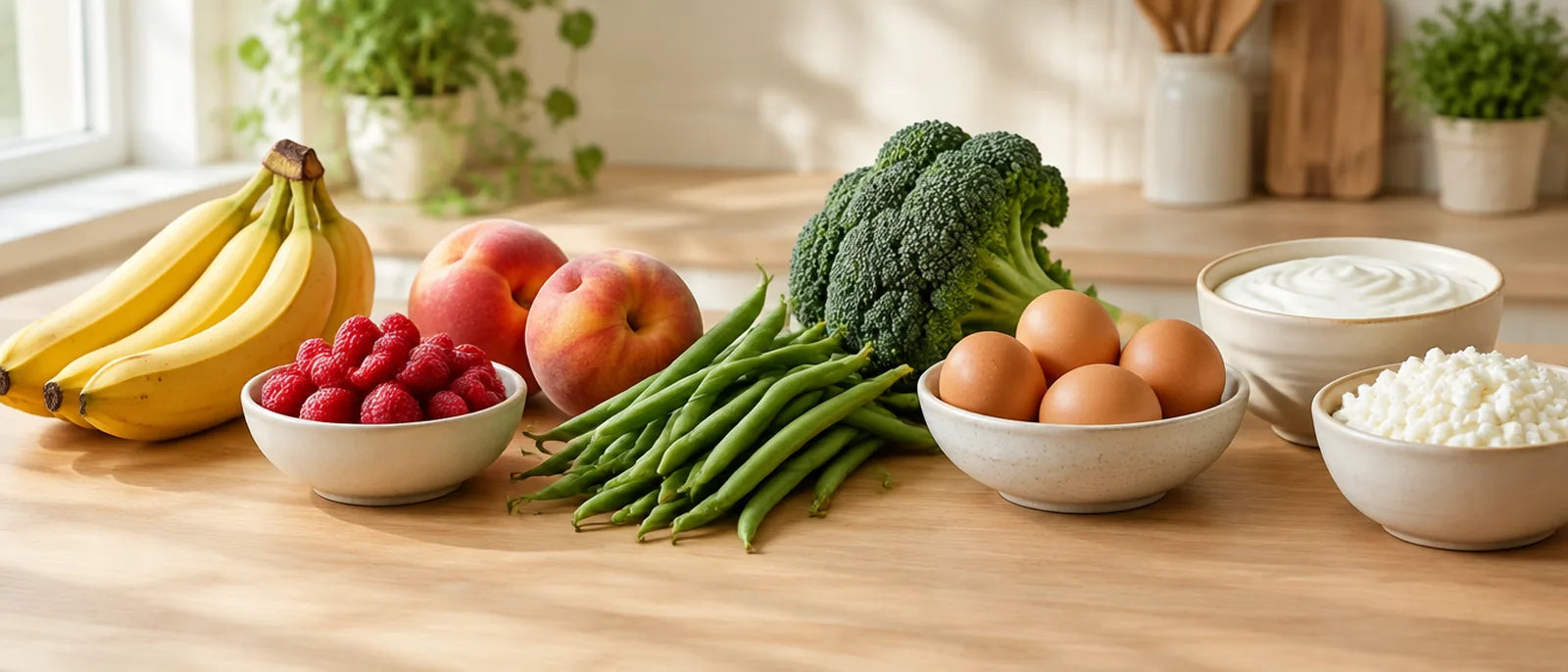
- Dairy and eggs: plain Greek yogurt (nonfat or whole-milk), 2% cottage cheese, string cheese, part-skim ricotta, shredded cheddar, 2% milk, ultrafiltered milk, eggs, carton egg whites
- Meat, poultry and seafood: 1 rotisserie chicken, boneless skinless chicken breast, 93% lean ground turkey, lean top sirloin, salmon fillets, cooked shrimp, sliced deli turkey breast
- Produce: raspberries and other berries, bananas, fresh peaches, green beans, broccoli, red bell pepper, zucchini, carrots, onion, celery, tomatoes, lettuce leaves, lemon
- Frozen: shelled edamame
- Pantry and canned: chia seeds, quinoa, white rice, dry lentils, canned black beans, canned diced tomatoes, canned light tuna, canned peaches in juice, chicken broth (low-sodium if you can), whole-wheat bread, flour tortillas, plain dry breadcrumbs, beef jerky, honey
- Oils and seasonings: olive oil, soy sauce, mustard, mild taco seasoning, chili seasoning, salt and pepper
- Protein extras (check labels): whey protein powder, ready-to-drink protein shakes, bone broth
White rice and flour tortillas count as refined carbohydrates: the advisory names white rice as one, the Dietary Guidelines name flour tortillas, and both say to limit refined carbohydrates [1][3]. Our rice bowls and breakfast wrap use them.
Our guide's Gentle Week comes with one shopping list for the whole week. Get the Gentle Week in our guide.
Protein on a GLP-1 Diet: How Much and When
Protein on a GLP-1 diet has a simple starting point: the 2025 advisory offers an absolute range of 80 to 120 g of protein a day [1]. It also suggests eating protein-rich foods first in a meal, so you eat them before you feel full [1]. The Dietary Guidelines 2025 to 2030 put protein foods at every meal [3].
- Spread it out: put a protein food at each meal and snack, in line with the Dietary Guidelines' protein foods at every meal [3].
- Find your own number: our page on how much protein you need on GLP-1 explains how to set a personal floor and target.
- Pair it with strength work: the advisory says more protein alone is likely not enough without strength training [1]. It pairs GLP-1 treatment with strength training at least 3 times a week plus at least 150 minutes of moderate aerobic activity a week [1]. Our page on a 10-minute GLP-1 workout at home is a place to start.
With kidney disease or kidney stones, read the notes below first.
Notes for Women and for Kidney Health
Women on a GLP-1 diet plan have extra points on intake, menopause and pregnancy. The food-safety and kidney notes apply to anyone.
- Very low intake: the advisory says vitamin and mineral intake is more likely to fall short below about 1,200 calories a day for women (1,800 for men) [1]. Treat it as a warning sign to raise with your clinician, not a target.
- Age and menopause: low protein may add to muscle loss, particularly with older age, perimenopause or menopause, low activity, or no strength training [1].
- Supplements: the advisory says clinicians can consider supplements for at-risk nutrients such as vitamin D, calcium and B12, tailored to the person [1].
- Pregnancy and breastfeeding: if you are pregnant, planning a pregnancy or breastfeeding, talk to your prescriber before changing how you eat and about your medicine. The Dietary Guidelines name iron, folate and iodine as top pregnancy priorities, advise no alcohol, and suggest asking a clinician about a daily prenatal vitamin [3]. For fish, the FDA and EPA advise 2 to 3 weekly servings from their Best Choices list (including canned light tuna) or 1 from their Good Choices list (including albacore) [8].
- Food safety: refrigerate leftovers within 2 hours and eat them within 3 to 4 days [9]. If you are pregnant, 65 or older, or have a weakened immune system, the CDC advises eating deli meat only after heating it to 165°F or until steaming hot [10].
- Kidney disease: with moderate to advanced chronic kidney disease, the KDIGO 2024 guideline suggests a lower protein intake than the ranges on this page [6]. Do not raise your protein without your clinician.
- Kidney stones: if you have had kidney stones, the advisory says to get counseling on avoiding high-oxalate foods, highly processed foods and animal-source proteins [1]. Ask your clinician before raising protein.
When to Call Your Clinician
Stop your GLP-1 medication and call your healthcare provider right away if you have severe stomach pain that will not go away, with or without nausea or vomiting. Call your clinician right away if nausea, vomiting or diarrhea does not go away. Tell all your healthcare providers before any planned surgery or procedure, and tell your clinician if you notice signs of a nutrient deficiency.
- Severe stomach pain: the Medication Guides for GLP-1 medicines say to stop using the medicine and call your healthcare provider right away if you have severe pain in your stomach area (abdomen) that will not go away, with or without nausea or vomiting [4].
- Symptoms that do not go away: the Medication Guides for GLP-1 medicines say to tell your healthcare provider right away if nausea, vomiting or diarrhea does not go away [4]. The fluid loss may cause kidney problems.
- Surgery or procedures: the Medication Guides say the medicine may increase the chance of food getting into your lungs during surgery or other procedures [4]. Tell all your healthcare providers that you take it before any scheduled surgery or other procedure. The Prescribing Information describes rare reports of pulmonary aspiration under general anesthesia or deep sedation in people who still had stomach contents despite reportedly following fasting instructions [5].
- Signs of nutrient deficiency: the advisory lists fatigue beyond what you would expect, excessive hair loss, flaky or itchy skin, muscle weakness, poor wound healing and unusual bruising [1]. Tell your clinician if you notice them.
For any other symptom, follow the Medication Guide that came with your medicine.
Frequently Asked Questions
What should I eat on my first day of a GLP-1?
Start with small portions of bland, low-fat foods such as plain Greek yogurt, cottage cheese or broth, eat slowly, and stop when you feel full [2]. The advisory says avoiding fatty or high-fiber foods in the first few days can ease nausea [1].
What should you not eat while on a GLP-1?
Few foods are strictly off limits. The limit table above lists what to cut back on and why, from large meals and fried foods to sugary drinks and alcohol [1][2][3].
What is the best diet on a GLP-1?
There is no official best diet. Current guidance points to small, regular meals built on protein foods, vegetables, fruit, beans and whole grains, with fewer refined grains, added sugars and ultra-processed foods [1][3].
What should I eat on a GLP-1 when I am not hungry?
If nausea keeps you from eating, the advisory suggests eating breakfast, then small meals every 3 to 4 hours with enough fluids. It also says healthfully prepared smoothies made with unsweetened milk or yogurt, cottage cheese and soups tend to be easier to face than heavier foods [1]. A reminder to eat can help.
Can you eat bananas on a GLP-1?
Yes. The 2025 advisory lists bananas among the fruits it encourages [1].
Can I drink alcohol on a GLP-1 diet?
The advisory says alcohol may worsen nausea and reflux and advises keeping it minimal [1]. The Dietary Guidelines say pregnant women and people taking medicines that can interact with alcohol should avoid it completely, so ask your prescriber what applies to you [3].
Do certain foods naturally boost GLP-1?
Eating raises your body's own GLP-1, with blood levels about 2 to 4 times higher after a meal [1]. The body inactivates it within about 1 to 2 minutes (its half-life) [1]. In animal studies and small human trials, fiber and unsaturated fat supplements often raised GLP-1 levels, and the advisory says further research is critical [1]. No food is a substitute for a GLP-1 medication; our page on GLP-1 supplements covers products sold with that promise.
Is there a GLP-1 diet plan PDF or printable grocery list?
The grocery list section on this page is one list by store section that you can print, and most browsers can save a printed page as a PDF.
Key Takeaways
- A GLP-1 diet plan is an eating pattern, not an official diet: small regular meals, protein first, fiber added slowly, and fluids through the day.
- Limit large meals, fatty and fried foods, refined grains, added sugars, sugary drinks, red and processed meats, ultra-processed snacks and alcohol.
- Keep gentle foods such as yogurt, cottage cheese, broth and shakes on hand for low-appetite days.
- Stop the medicine and call your healthcare provider right away for severe stomach pain that will not go away. Call your clinician right away if nausea, vomiting or diarrhea does not go away, and tell all your healthcare providers before any surgery or procedure.
A good GLP-1 diet plan is the one you can repeat on your hardest days.
References
- Mozaffarian D, Agarwal M, Aggarwal M, et al. Nutritional priorities to support GLP-1 therapy for obesity: a joint advisory from the American College of Lifestyle Medicine, the American Society for Nutrition, the Obesity Medicine Association, and The Obesity Society. Obesity. 2025;33(8):1475-1503
- Gorgojo-Martínez JJ, Mezquita-Raya P, Carretero-Gómez J, et al. Clinical Recommendations to Manage Gastrointestinal Adverse Events in Patients Treated with Glp-1 Receptor Agonists: A Multidisciplinary Expert Consensus. J Clin Med. 2023;12(1):145
- U.S. Department of Agriculture and U.S. Department of Health and Human Services. Dietary Guidelines for Americans, 2025-2030. January 2026
- FDA-approved Medication Guides for GLP-1 medicines (checked 2026-09-30)
- FDA-approved Prescribing Information for GLP-1 medicines (checked 2026-09-30)
- Kidney Disease: Improving Global Outcomes (KDIGO) CKD Work Group. KDIGO 2024 Clinical Practice Guideline for the Evaluation and Management of Chronic Kidney Disease. Kidney Int. 2024;105(4S):S117-S314
- U.S. Department of Agriculture. FoodData Central
- U.S. Food and Drug Administration. Advice about Eating Fish
- USDA Food Safety and Inspection Service. Leftovers and Food Safety
- Centers for Disease Control and Prevention. Preventing Listeria Infection
Protein and fiber values per serving come from USDA FoodData Central and match the values on our recipe pages, checked in September 2026. The grocery list uses only foods from those recipe pages. The kidney guideline and the FDA and EPA fish advice match our recipe and protein pages, checked in September 2026.
This article is for education only and is not medical advice. It describes general eating patterns and gives no personalized dosing advice. Talk to your clinician before you change how you eat, especially if you have kidney disease or are pregnant or breastfeeding. Read our full medical disclaimer.