
Wegovy Pill vs Injection: Doses, Weight Loss, Side Effects, and Cost Compared
Wegovy pill vs injection compared from the FDA label: daily tablet vs weekly shot, OASIS 4 and STEP 1 weight loss, side effects, switching between forms, 2026 prices, Medicare, and who might prefer each form.


The Wegovy pill vs injection choice turns mostly on routine, approved uses, and cost: both contain semaglutide and share one FDA label [1]. The pill is a daily 25 mg tablet with a strict morning routine. The shot is weekly, usually 2.4 mg, with a 7.2 mg option for some adults.
In separate trials, average weight loss was 13.6% on the pill (64 weeks) and 14.9% on the shot (68 weeks) [1]. We found no head-to-head trial, and the label says side effect types were similar. Prices are as of September 30, 2026. For the full routine, see how to take the Wegovy pill.
In this guide:
- How the routine, doses, and absorption differ
- What OASIS 4 and STEP 1 show, and what they cannot
- Side effects, costs, Medicare, and switching
This page does not pick a winner; that choice is made with your prescriber.
Table of Contents
- Wegovy pill vs injection at a glance
- How you take the Wegovy pill vs the injection
- Wegovy pill vs injection doses
- Is the Wegovy pill as effective as the injection?
- Wegovy pill vs injection side effects
- Wegovy pill vs injection cost and insurance coverage
- Switching between the Wegovy pill and injection
- Who might prefer the Wegovy pill or the injection
- Eating well on the Wegovy pill or injection
- Frequently asked questions
- Key takeaways
Wegovy Pill vs Injection at a Glance
The Wegovy pill and the Wegovy injection deliver the same medicine, semaglutide, but differ in how often you take them, food rules, approved uses, and price. FDA approved the tablets on December 22, 2025, as a new dosage form of Wegovy [4].
| Feature | Wegovy pill (tablets) | Wegovy injection |
|---|---|---|
| How often | Once daily, in the morning | Once weekly, same day each week, any time of day |
| Food and water | Empty stomach, up to 4 oz of plain water, then wait at least 30 minutes | With or without meals |
| Doses | 1.5, 4, and 9 mg for 30 days each, then 25 mg from day 91 | 0.25 to 1.7 mg over 16 weeks, then 2.4 mg (or 1.7 mg) from week 17; 7.2 mg option |
| Share of the dose absorbed | About 1% to 2% | 89% |
| Approved for | Adults: weight reduction and lowering heart risk | The same, plus ages 12 and older and noncirrhotic MASH |
| Missed dose | Skip it and take the next one the next day | Take it if the next dose is more than 2 days away; otherwise skip it |
| Storage | Room temperature, in the original closed bottle, kept dry | Refrigerator; single-dose pens may stay at 46°F to 86°F for up to 28 days before the cap comes off; the FlexTouch pen keeps 56 days after first use |
| Breastfeeding | Not recommended (the tablet ingredient SNAC or its breakdown products are found in breast milk) | No SNAC; no data on injected semaglutide in breast milk |
| Self-pay price per month | $149 to $299 | $349 ($399 for 7.2 mg; $199 new-patient offer on 2 starting fills) |
Sources: Wegovy Prescribing Information and Medication Guide, revised 06/2026 [1][2][3]; NovoCare, read September 30, 2026 [10].
Semaglutide stays in the blood for about 5 to 7 weeks after the last maintenance dose of either form, and both carry the same boxed warning [1].
How You Take the Wegovy Pill vs the Injection
The Wegovy pill needs a strict morning routine every day, while the Wegovy injection is a weekly shot with no food rules [1]. The pill routine from the label:
- Take one tablet on an empty stomach in the morning with up to 4 ounces of plain water and no other liquid.
- Swallow it whole. Do not split, crush, or chew it.
- Wait at least 30 minutes before eating, drinking, or taking other oral medicines.
- Take no more than one tablet a day.
The rules exist because only about 1% to 2% of the tablet's semaglutide is absorbed. An ingredient called SNAC helps it get absorbed, mainly in the stomach [1].
The shot goes under the skin of the abdomen, thigh, or upper arm once a week, at any time of day, with or without meals. Rotate the site with each dose [1]. The four-dose FlexTouch pen is not recommended for self-injection by people with impaired vision.
In a label study, the tablet raised exposure to levothyroxine, a thyroid medicine, by 33%, and the label advises monitoring the effects of other oral medicines [1]. As general advice, if you take other morning pills, ask your prescriber how to time them.
Wegovy Pill vs Injection Doses
Wegovy pill doses step up every 30 days to 25 mg once daily, while Wegovy injection doses step up every 4 weeks to 2.4 mg once weekly [1]. The milligram numbers cannot be compared between the two forms.
| Days | Daily tablet dose |
|---|---|
| 1 to 30 | 1.5 mg |
| 31 to 60 | 4 mg |
| 61 to 90 | 9 mg |
| 91 onward | 25 mg (maintenance) |
| Weeks | Weekly injection dose |
|---|---|
| 1 to 4 | 0.25 mg |
| 5 to 8 | 0.5 mg |
| 9 to 12 | 1 mg |
| 13 to 16 | 1.7 mg |
| 17 onward | 2.4 mg (recommended) or 1.7 mg (maintenance) |
The 25 mg tablet is the only pill maintenance dose. If a person cannot tolerate it, the label says to consider switching to the 1.7 mg injection [1]. Only the injection has a higher step: for people who tolerate 2.4 mg for at least 4 weeks, the dose may rise to 7.2 mg (Wegovy HD) when more weight reduction is clinically indicated.
Is 25 mg stronger than 2.4 mg? No. About 89% of an injected dose reaches the blood, compared with 1% to 2% of a tablet, so the tablet needs a larger number for similar levels [1]. Your prescriber sets your dose; this page gives no personal dosing advice.
Is the Wegovy Pill as Effective as the Injection?
The Wegovy pill and the Wegovy injection produced similar average weight loss in separate trials: 13.6% at 64 weeks with the 25 mg pill and 14.9% at 68 weeks with the 2.4 mg shot [1]. We found no head-to-head trial comparing them, so neither form can be called more effective.
| Measure | OASIS 4: 25 mg pill | STEP 1: 2.4 mg injection |
|---|---|---|
| Adults enrolled | 307, without type 2 diabetes | 1,961, without type 2 diabetes |
| Women | 79% | 74% |
| Length | 64 weeks | 68 weeks |
| Average weight change | -13.6% | -14.9% |
| Average change on placebo | -2.4% | -2.4% |
| Lost at least 5% | 76.3% | 83.5% |
| Lost at least 10% | 59.8% | 66.1% |
| Lost at least 15% | 47% | 47.9% |
| Lost at least 20% | 27.9% | 30.2% |
Source: Wegovy Prescribing Information, section 14.2, Tables 8 and 11 [1]. Each trial compared its drug with placebo, not with the other form, and both paired treatment with diet and activity counseling.
What the Trials Cannot Tell You
These are two different trials, published more than four years apart, with different lengths and people [5][6]. Weight data were missing at the end for 6.3% of OASIS 4 pill users and 7.2% of STEP 1 injection users [1].
An indirect comparison of the two trials found a small numerical edge for the injection: 1.01 percentage points in one analysis and 0.55 in another [7]. The confidence intervals include no difference, and the authors note their findings do not come from a head-to-head comparison. Novo Nordisk, the maker of Wegovy, funded OASIS 4, STEP 1, and this analysis [5][6][7]. A 2026 systematic review also states that head-to-head trials are lacking [8].
You may see 16.6% quoted for the pill. That company figure estimates weight loss if all patients had stayed on treatment [9], so it cannot be set against the 13.6% or 14.9% above.
Blood Levels and Type 2 Diabetes
In adults without type 2 diabetes, the label predicts similar average semaglutide levels: about 77 nmol/L on the 25 mg pill and 75 nmol/L on the 2.4 mg shot. Levels varied more on the pill: 90% of people fell between 27 and 186 nmol/L, compared with 51 to 110 nmol/L on the shot [1].
In type 2 diabetes, levels were lower on the pill (about 44 vs 68 nmol/L), and the tablets were not studied for weight loss in this group [1]. If the response to tablets is inadequate, the label says to consider other options, including the injection.
The 7.2 mg injection has no tablet equivalent. In a 72-week trial, it produced an average loss of 18.8%, compared with 15.5% on 2.4 mg [1]. For how Wegovy compares with tirzepatide, see Zepbound vs Wegovy.
Wegovy Pill vs Injection Side Effects
The Wegovy label says the types and frequency of common side effects with the pill were similar to those seen with the Wegovy injection [1]. The figures come from different trials, and we found no head-to-head safety data, so neither form is proven to cause fewer side effects.
Stomach and bowel effects are the most common with both. In the injection trials, nausea affected 44% of people vs 16% on placebo, diarrhea 30% vs 16%, and vomiting 24% vs 6% [1].
| Side effect | Wegovy pill 25 mg vs placebo | Wegovy injection vs placebo |
|---|---|---|
| Any digestive side effect | 74.0% vs 42.2% (OASIS 4 paper) | 73% vs 47% (2.4 mg) |
| Severe digestive side effects | 2% vs 0% | 4.1% vs 0.9% |
| Gallstones | 2.5% vs 1% | 1.6% vs 0.7% |
| Altered skin sensation (dysesthesia) | 5% vs 0% | 6% (2.4 mg) and 22% (7.2 mg) vs 0.3% |
| Stopped because of side effects | About 7% vs 5.9% | 6.8% vs 3.2% |
| Injection site reactions | Not applicable | 1.4% vs 1% |
Sources: Wegovy Prescribing Information, sections 5, 6.1, and 14.2 [1]; OASIS 4 publication [5]. The trials differed in length, size, and how events were counted, so compare the rows with care.
The label adds that dysesthesia became more common as the dose and blood levels rose [1].
Warnings That Apply to Both
Both forms carry the same boxed warning about the risk of thyroid C-cell tumors [1]. Neither form should be used by people with a personal or family history of medullary thyroid cancer or MEN 2. The main warnings are also shared: pancreatitis, gallbladder disease, low blood sugar with insulin or sulfonylureas, kidney injury from dehydration, and severe stomach problems. The list continues with serious allergic reactions, diabetic eye complications, a faster heart rate, and aspiration risk during anesthesia or deep sedation.
| Situation | What the Medication Guide says |
|---|---|
| Severe pain in the stomach area that will not go away, with or without nausea or vomiting | Stop using Wegovy and call your healthcare provider right away |
| Swelling of the face, lips, tongue, or throat; problems breathing or swallowing; severe rash or itching; fainting or dizziness; very rapid heartbeat | Stop using Wegovy and get medical help right away |
| Taking too much Wegovy | Call your healthcare provider or the Poison Help line at 1-800-222-1222, or go to the nearest hospital emergency room right away |
Source: Wegovy Medication Guide, revised 06/2026 [1].
Wegovy Pill vs Injection Cost and Insurance Coverage
As of September 30, 2026, the Wegovy pill costs $149 to $299 a month without insurance, and the Wegovy injection costs $349 a month ($399 for 7.2 mg) through NovoCare, the maker's program [10]. Both forms carry the same list price of $1,349.02 per package.
| Dose level | Wegovy pill (bottle of 30 tablets) | Wegovy injection (box of 4 pens) |
|---|---|---|
| Starting doses | $149 (1.5 mg), $199 (4 mg) | $349 (0.25 and 0.5 mg); $199 for the first 2 monthly fills for new patients, through December 31, 2026 |
| Middle doses | $299 (9 mg) | $349 (1 and 1.7 mg) |
| Maintenance | $299 (25 mg) | $349 (2.4 mg); $399 (7.2 mg, Wegovy HD) |
| List price | $1,349.02 | $1,349.02 |
Source: NovoCare Wegovy cost and savings page, read September 30, 2026 [10]. The program terms say they can change or end at any time.
At usual maintenance doses, the pill costs $50 less per month at self-pay prices. With commercial insurance, the savings offer can bring either form down to as little as $25 a month, with savings capped at $100 a month [10]. People with government insurance are excluded. Ask your plan whether it covers the pill, the injection, or both, and whether it needs prior authorization.
Medicare: The $50 Bridge Copay for Both Forms
From July 1, 2026, to December 31, 2027, the Medicare GLP-1 Bridge gives eligible Part D beneficiaries Wegovy tablets or injection for a $50 copay [11][12]. The main CMS rules:
- Adults 18 and older, prescribed the drug for weight reduction.
- A BMI of 35 or more, or 30 or more with heart failure with preserved ejection fraction, uncontrolled high blood pressure, or chronic kidney disease stage 3a or worse. A BMI of 27 or more also qualifies with prediabetes, a prior heart attack or stroke, or symptomatic peripheral artery disease.
- Prior authorization is required, and only 28-day or 30-day fills are covered.
- People with type 2 diabetes, moderate to severe sleep apnea, or MASH use their Part D plan instead.
For the other daily GLP-1 pill, see orforglipron (Foundayo) price.
Switching Between the Wegovy Pill and Injection
The Wegovy label allows switching between the pill and the injection in both directions, but it gives rules only for the 2.4 mg shot and the 25 mg tablet [1]:
- Shot to pill: start 25 mg tablets once daily one week after the last 2.4 mg injection.
- Pill to shot: start the 2.4 mg weekly injection the day after the last 25 mg tablet. If the 25 mg tablets were not tolerated, consider 1.7 mg.
For other doses, including 7.2 mg, the label gives no rule, so your prescriber decides. After a switch to the pill, the morning routine applies from the first tablet. Missed-dose rules change too: missing 2 or more shots in a row means restarting at a lower dose [1].
Who Might Prefer the Wegovy Pill or the Injection
Neither the Wegovy pill nor the Wegovy injection is better for everyone, since we found no trial comparing them directly. Label facts point to practical differences that you and your prescriber can weigh [1].
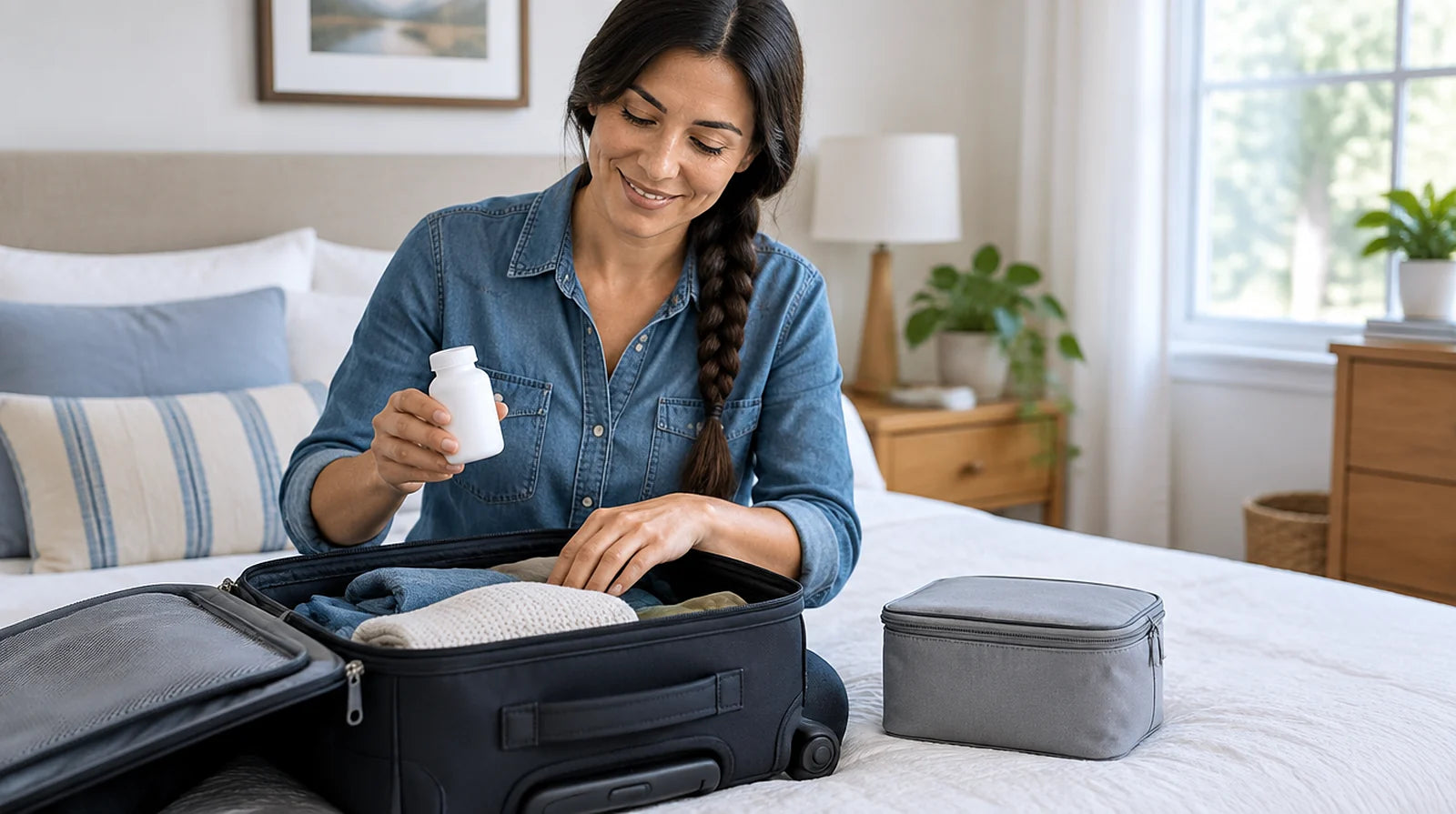
Points that may favor the pill:
- No needles.
- Tablets stay at room temperature in their bottle, which can make travel simpler.
- A daily habit may be easier to keep for people who like a fixed morning routine.
Points that may favor the injection:
- One dose a week, with no food or water rules.
- No 30-minute wait, which fits a busy morning with other pills.
- The only form approved for teens 12 and older and for MASH, and the only one with a 7.2 mg dose.
- Breastfeeding is not recommended on the tablets because of SNAC; the injection contains no SNAC, but there are no data on injected semaglutide in breast milk. Ask your prescriber about breastfeeding on either form.
- In type 2 diabetes, the tablets were not studied for weight loss and gave lower blood levels.
Planning a pregnancy works the same way for both: the label says to stop Wegovy at least 2 months before trying to conceive. In the end, your prescriber and your plan's coverage decide. Other GLP-1 pills exist too; see our GLP-1 drugs list and Foundayo vs Zepbound.
Eating Well on the Wegovy Pill or Injection
Eating well works the same way on the Wegovy pill and the Wegovy injection; only the timing differs. On the pill, breakfast comes at least 30 minutes after the tablet, while the shot has no meal timing rule [1]. Our GLP-1 breakfast ideas fit that window.
Both trials paired the medicine with about 500 fewer calories a day and advice to get at least 150 minutes of activity a week [1]. A 2025 joint nutrition advisory notes that protein targets of 1.2 to 1.6 grams per kilogram of body weight per day have been proposed during active weight loss [13]. The right body weight to use is unsettled, and strength training is also needed to protect muscle. Our page on how much protein to eat on a GLP-1 explains the math. If you want high-protein recipes and meal ideas sized for a smaller appetite, see our guide.
Frequently Asked Questions
Is the Wegovy pill as effective as the injection?
Average weight loss was similar in separate trials: 13.6% on the pill (64 weeks) and 14.9% on the shot (68 weeks). We found no head-to-head trial.
Does the Wegovy pill have fewer side effects than the shot?
That is not proven. The label says side effect types and frequency were similar, but the data come from different trials.
Is the Wegovy pill cheaper than the injection?
At self-pay prices, yes: $149 to $299 a month for the pill vs $349 for most pen doses, as of September 30, 2026.
Is 25 mg of the Wegovy pill stronger than 2.4 mg of the shot?
No. About 1% to 2% of a tablet is absorbed vs 89% of an injection, so average blood levels end up similar in adults without type 2 diabetes.
Does the Wegovy pill feel different than the shot?
We found no trial that compared how people feel on each form. Levels peak about 1 hour after a tablet and 1 to 3 days after a shot.
Can I switch from the Wegovy shot to the pill?
Yes, with your prescriber. The label starts 25 mg tablets one week after the last 2.4 mg injection.
Which works faster, the Wegovy pill or the injection?
We found no trial that compared how fast each form works. The pill reaches maintenance on day 91, the shot at week 17.
Can I take the Wegovy pill if I have type 2 diabetes?
Ask your prescriber. The tablets were not studied for weight loss in type 2 diabetes, and blood levels were lower than with the shot.
Why do people stop taking Wegovy?
In OASIS 4, 18% on the pill and 25.5% on placebo stopped the study drug; in three injection trials, 16% vs 19% did. About 7% stopped for side effects on either form.
Does Medicare cover the Wegovy pill and injection?
The Medicare GLP-1 Bridge covers either form for eligible beneficiaries with a $50 copay, July 1, 2026, to December 31, 2027, with prior authorization.
Key Takeaways
- The Wegovy pill and injection share one medicine, semaglutide, and one FDA label.
- The pill is daily with a 30-minute morning routine; the shot is weekly, with no food rules.
- Separate trials showed 13.6% and 14.9% average weight loss; we found no head-to-head trial.
- The label allows switching between the 2.4 mg shot and 25 mg pill both ways.
- Self-pay maintenance costs $299 (25 mg pill) vs $349 (2.4 mg shot) a month, as of September 30, 2026.
Whichever form you and your prescriber choose, protein-first meals help you make the most of a smaller appetite, and our guide has recipes and meal ideas to make that easier.
References
- Wegovy (semaglutide) injection and Wegovy (semaglutide) tablets Prescribing Information and Medication Guide, revised 06/2026: Novo Nordisk
- Wegovy label, NDA 218316 supplement 7, June 2026: U.S. Food and Drug Administration
- Wegovy label on DailyMed, SPL version 19: U.S. National Library of Medicine
- Drugs@FDA, NDA 218316 (Wegovy tablets): U.S. Food and Drug Administration
- Wharton S et al. Oral Semaglutide at a Dose of 25 mg in Adults with Overweight or Obesity. N Engl J Med, 2025
- Wilding JPH et al. Once-Weekly Semaglutide in Adults with Overweight or Obesity. N Engl J Med, 2021
- Plotkin M et al. Semaglutide 25 mg Oral Versus Semaglutide 2.4 mg Injectable: An Indirect Treatment Comparison of Weight Loss Outcomes. Diabetes Obes Metab, 2026
- La Vignera S, Condorelli RA. Oral vs. Subcutaneous Semaglutide for Obesity Treatment: A Systematic Review of Efficacy, Safety, and Patient-Oriented Outcomes. Pharmaceuticals (Basel), 2026
- FDA approval of the Wegovy pill, press release, December 22, 2025: Novo Nordisk
- Wegovy cost, coverage, and savings, read September 30, 2026: NovoCare
- Medicare GLP-1 Bridge, page last modified 07/13/2026: Centers for Medicare and Medicaid Services
- Medicare GLP-1 Bridge: Information for Prescribers, June 2026: Centers for Medicare and Medicaid Services
- Nutritional priorities to support GLP-1 therapy for obesity: joint advisory from ACLM, ASN, OMA, and TOS, 2025
This article is for education only and is not medical advice. It summarizes the FDA label, trial publications, and published prices, and it gives no personalized dosing advice. Talk to your prescriber about your medicine and your dose. Read our full medical disclaimer.